
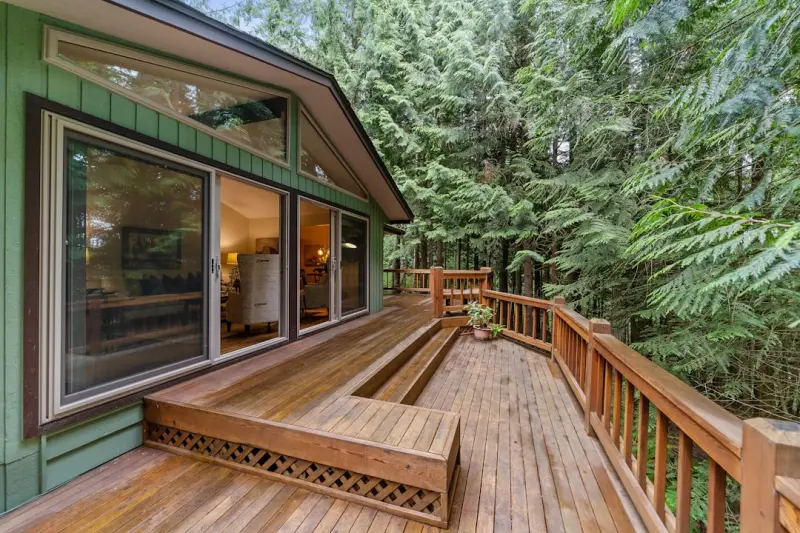
Why Your Next Deck Should Be an Intelligent Outdoor Interface
When I first started sketching deck plans for a boutique coworking space, I treated the deck like any other patio—an after‑thought to the interior. That mindset changed the moment a client asked, “Can we use the deck to do more than host a happy hour?” The answer was a resounding yes, and it sparked a deep dive into how decks can evolve from static platforms into dynamic, data‑rich extensions of a building’s ecosystem.
From Passive Surface to Active Interface
Historically, decks have been built for aesthetics and basic functionality: a place to sit, a spot for a grill, a surface for a swing set. But the construction industry is undergoing a quiet revolution, where every square foot can generate value beyond its immediate use. A deck, when designed with foresight, can become a hub for:
- Environmental monitoring—integrating temperature, humidity, and UV sensors that feed real‑time data to facility managers.
- Energy generation—embedding thin‑film solar cells or kinetic floor tiles that capture foot traffic energy.
- Smart lighting and safety—motion‑activated LEDs that adjust color temperature based on time of day and activity level.
These capabilities transform a deck from a decorative element into a living interface that supports operational decisions, sustainability goals, and user experience.
Design Foundations: Materials That Play Well with Tech
Choosing the right substrate is the first step. Traditional pressure‑treated lumber still has its place, but newer composites and engineered wood products offer better durability and a more stable platform for embedded electronics. When I recommend a deck for an intelligent upgrade, I look for:
- Low moisture absorption—to protect sensors from corrosion.
- Structural rigidity—to support the weight of solar panels or kinetic tiles without flex.
- Ease of routing—materials with pre‑drilled channels simplify the installation of wiring and fiber.
For projects that demand high performance, I often suggest a hybrid approach: a core of aluminum framing for strength, clad with a composite deck board that can be machined for sensor pockets.
Embedding Sensors: The Nerve Center of the Deck
Imagine a deck that knows when rain is approaching, when foot traffic spikes, or when the ambient temperature drops below a comfort threshold. By installing a network of digital grain mapping-style sensors—tiny devices that can read wood moisture content and structural health—you create a feedback loop that alerts maintenance teams before a board warps or a fastener fails.
Beyond structural health, environmental sensors can inform energy strategies. A deck equipped with solar micro‑panels can feed a building‑level energy management system, while kinetic tiles that harvest footsteps generate micro‑power for lighting or IoT hubs. The data collected becomes a valuable asset for facilities aiming to meet sustainability benchmarks.
Powering the Deck: Distributed Energy on the Edge
Solar integration on decks often raises the question: “Is there enough roof‑equivalent area?” The answer lies in modularity. Thin‑film photovoltaics can be laminated directly onto deck boards, preserving aesthetics while providing a modest but meaningful kilowatt output. When combined with battery storage hidden beneath the joists, the deck can become a semi‑autonomous power source for its own lighting, sensors, and even nearby outdoor appliances.
For a more experimental angle, kinetic flooring—piezoelectric tiles that convert footfall into electricity—offers a fun, interactive way to generate power. While the energy yield is low, it’s perfect for powering low‑voltage devices like Bluetooth beacons that guide visitors or provide location‑based content.
Smart Lighting: The Night‑Time Personality of Your Deck
Lighting is where technology meets ambience. Motion‑sensing LEDs that brighten as people approach and dim when the area is vacant not only save energy but also enhance safety. By linking the lighting control to sensor data—such as ambient light levels and weather forecasts—the deck can autonomously adjust its illumination schedule.
Advanced setups integrate color‑changing LEDs that respond to real‑time data streams. For instance, a deck at a corporate campus could shift to a calming blue hue during after‑hours to signal a “quiet zone,” or flash orange during a fire drill. The visual language becomes part of the building’s communication strategy.
Data Integration: Turning Deck Metrics into Actionable Insights
The real power of an intelligent deck emerges when its data feeds into broader building management platforms. By exposing sensor feeds through standard protocols (BACnet, MQTT, or REST APIs), facilities can:
- Correlate foot traffic patterns with HVAC loads to fine‑tune ventilation.
- Detect moisture spikes that may indicate water ingress, prompting pre‑emptive waterproofing measures.
- Use energy generation data to adjust net‑metering strategies and reduce grid reliance.
If your organization already leverages a digital twin of the site—an exact virtual replica of the building—deck data can be layered onto that model, providing a richer simulation environment. This synergy mirrors the benefits described in Digital Twins on the Jobsite, where granular data elevates decision‑making.
Maintenance Made Predictive
Traditional deck upkeep is reactive: a board rots, a railing wobbles, you call a contractor. With embedded health sensors, maintenance becomes predictive. Algorithms can analyze trends in moisture content, vibration, and load distribution, flagging components that are approaching their failure point.
Predictive maintenance reduces downtime and extends the deck’s lifespan. Moreover, it creates an opportunity for facilities to schedule minor repairs during low‑usage windows, preserving the deck’s availability for occupants.
Business Benefits: From Cost Savings to New Revenue Streams
Beyond the operational advantages, an intelligent deck can unlock new revenue models. For commercial properties, offering premium “smart deck” access—complete with charging stations, Wi‑Fi, and real‑time occupancy data—can justify higher leasing rates. Event venues can sell “data‑enhanced” experiences, where attendees receive personalized lighting or temperature adjustments based on their preferences collected via a mobile app.
Even in residential contexts, homeowners can monetize excess solar generation from deck panels through net‑metering programs, turning a leisure space into a modest income source.
Case Study: A Campus Recreation Deck That Learns
One recent project involved retrofitting a university’s outdoor recreation deck. The goals were to improve safety, reduce energy consumption, and provide a data‑rich environment for research students. The solution included:
- Composite decking with integrated moisture sensors.
- Thin‑film solar strips along the perimeter, feeding a small battery bank.
- Motion‑activated LED strips that dim during low‑traffic periods.
- A data hub that streamed sensor information to the campus’s sustainability dashboard.
Within six months, the university reported a 15% reduction in outdoor lighting energy use and identified two early‑stage water intrusion issues that were fixed before any structural damage occurred. The deck’s data also became a live lab for engineering students studying IoT applications.
Implementation Checklist
Ready to turn a conventional deck into an intelligent outdoor interface? Use this checklist to keep the project on track:
- Define Objectives—What outcomes matter most? Energy generation, safety, data analytics?
- Select Materials—Choose composites or engineered wood that support sensor integration.
- Plan Sensor Layout—Map out moisture, temperature, and occupancy sensors for optimal coverage.
- Choose Power Solutions—Decide between solar panels, kinetic tiles, or hybrid approaches.
- Design Lighting—Specify motion‑sensing LEDs and color‑changing capabilities.
- Integrate with Building Systems—Ensure compatibility with existing BMS or digital twin platforms.
- Develop Maintenance Protocols—Set thresholds for alerts and schedule predictive inspections.
- Test and Calibrate—Run a commissioning phase to validate sensor accuracy and energy output.
- Train Staff—Educate facilities teams on interpreting data and responding to alerts.
- Monitor and Iterate—Continuously assess performance and refine settings for optimal results.
Future Outlook: Decks as Nodes in the Smart City Fabric
Looking ahead, decks could become integral nodes in a broader smart‑city network. Imagine a city where every public deck contributes data on foot traffic, ambient conditions, and micro‑generation, feeding a municipal dashboard that optimizes public transit, street lighting, and emergency response.
Such a vision aligns with the growing trend of “edge computing,” where processing happens close to the data source. By equipping decks with low‑power micro‑controllers capable of local analytics, you reduce latency and bandwidth demands, making real‑time, localized decision‑making feasible.
Wrapping Up: The Deck as a Strategic Extension
When I first imagined a deck, it was a simple wooden platform for summer evenings. Today, that vision has expanded into a platform that can sense, generate, and communicate. By embracing intelligent materials, embedded sensors, and integrated power solutions, you can transform an outdoor space into a strategic extension of your building’s operations.
Whether you’re a facility manager seeking predictive maintenance, a developer aiming to differentiate a commercial asset, or a homeowner looking to add value—and a touch of tech wizardry—to your backyard, the intelligent deck offers a compelling path forward.
Ready to make the leap? Start with a pilot segment, gather data, and let the deck tell you what it needs. The future of outdoor spaces is already here, and it’s smarter than ever.

Tom Ferguson is a Canadian freelance writer with a passion for storytelling, current events, and thoughtful commentary. Drawing on years of writing experience, he shares engaging insights on a wide range of topics, bringing a uniquely Canadian perspective to his work.
Related Posts

Hybrid Deck Design: Turning Outdoor Platforms into Productive Work‑Life Hubs
Discover how to convert a simple deck into a versatile hybrid workspace that boosts productivity, su... Read More

Reimagining Decks: Turning Outdoor Platforms into Data‑Driven Business Assets
This post explores how modern decks can evolve from seasonal patios into intelligent, revenue‑gene... Read More
Rethinking Decks: From Seasonal Patio to Year‑Round Asset
A forward‑looking look at how decks are evolving beyond seasonal patios into adaptable, tech‑enh... Read More
Top Posts

Turn Your Home Into a Calm Retreat Without Major Renovations
Simple, affordable tweaks—like smart lighting, hidden storage, and soothing scents—can turn any space into a tranquil sanctuary, boosting comfort and wellbe...Read More

Wood Working Wonders: How This Timeless Craft Can Elevate Your Home
Woodworking is a timeless craft that offers endless possibilities for creativity and self-expression. Learn how this craft can elevate your home and discover ti...Read More

Beyond Shades: Crafting Window Treatments That Reflect Your Lifestyle
Learn how to turn ordinary windows into statements of style and function, with tips on light, fabric, sustainability, and easy DIY updates that fit any budget....Read More

The Quiet MVP: How Smart Duct Cleaning Boosts Energy Efficiency and Occupant Health
A clean duct system does more than freshen the air; it slashes energy use, extends equipment life, and promotes occupant well‑being. Learn how to turn routine...Read More
0 Comments
Post Comment
You will need to Login or Register to comment on this post!