
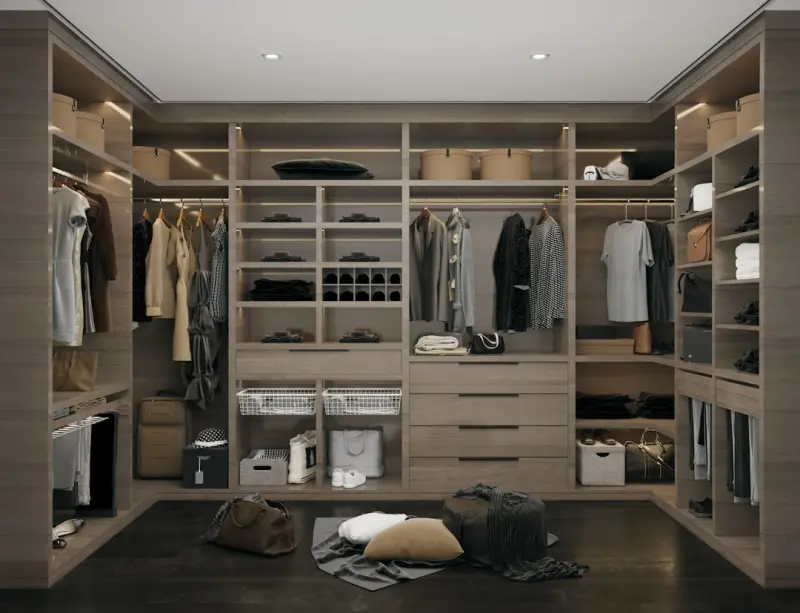
Reimagining the Closet: From Storage Box to Strategic Asset
When I first walked into a corporate office that boasted a “smart closet,” my expectation was modest: perhaps a sleek set of shelves with a hidden charging dock. What I discovered was an ecosystem that talks, learns, and reacts to the daily rhythm of its users. In my 15‑year career of turning ordinary spaces into high‑performing environments, I’ve seen desks, conference rooms, and even break areas undergo digital makeovers. The closet, however, has been the quiet afterthought—until now. This is the story of how intelligent storage is becoming the productivity hack every modern office needs.
The Business Case Behind a Smart Closet
At first glance, a closet is a static container for coats, files, or the occasional office‑sized treadmill. Yet, the hidden cost of disorganization is anything but static. Employees spend up to 15 minutes a day hunting for supplies, hunting for a spare charger, or trying to locate a presentation clicker. Multiply that by 200 staff members, and you’re looking at over 500 hours of lost focus each year. A connected closet can slash that waste dramatically.
- Real‑time inventory tracking: RFID tags and weight sensors report which items are in use, which are idle, and which need replenishment.
- Automated restocking: Integrated with procurement software, the closet can place orders for pens, batteries, or cleaning supplies the moment a threshold is crossed.
- Space analytics: Heat‑maps show which shelves are under‑utilized, allowing facilities teams to re‑configure layouts without costly guesswork.
- Energy efficiency: Smart lighting that only activates when motion is detected reduces electricity consumption by up to 30%.
All of these data points feed directly into a dashboard that senior leadership can use to measure ROI in minutes rather than months.
From Sensors to Strategy: How the Technology Works
The core of any intelligent closet is a network of low‑power sensors. These include:
- RFID readers that identify tagged items as they pass in and out.
- Weight sensors beneath each shelf, delivering a subtle yet accurate indication of load changes.
- Ambient light and motion detectors that trigger illumination only when needed.
- Temperature and humidity probes that safeguard delicate equipment like laptops or archival documents.
All sensor data streams into a local edge‑computing hub, which runs lightweight AI models to filter noise and generate actionable insights. Because the processing happens on‑site, latency is near‑instant and privacy concerns are minimized—no need to ship sensitive inventory data to the cloud.
Design Meets Function: The Aesthetic Imperative
It’s tempting to think of a smart closet as a tech‑heavy monstrosity, but the best implementations marry technology with timeless design. I’ve worked with architects who favor modular, minimalistic panels that slide open with a whisper, revealing a clean grid of bins and drawers. The visual language is deliberately muted, allowing the closet to blend into the office’s overall aesthetic while still delivering its hidden intelligence.
For firms that champion sustainability, the materials choice matters. Reclaimed wood, recycled aluminum, and low‑VOC finishes keep the carbon footprint low. Pair that with a system that optimizes insulation’s hidden benefits by maintaining a stable interior climate, and you have a product that feels good to use and good to own.
Implementation Blueprint: A Step‑by‑Step Guide
Deploying a smart closet is less about ripping out walls and more about strategic layering. Below is the roadmap I’ve refined over the past decade:
- Assessment Phase: Conduct a walk‑through audit to map existing storage pain points. Ask employees what they lose most often—pens, chargers, or the ever‑elusive stapler.
- Data Architecture: Choose an integration platform that speaks the language of your ERP or procurement system. This ensures that inventory alerts translate directly into purchase orders.
- Hardware Selection: Opt for sensors that are plug‑and‑play and have a proven lifespan of at least five years. Consider vendors that offer quick, smart fixes for any on‑site adjustments.
- Pilot Deployment: Install the system in a single department, track usage metrics for 30 days, and fine‑tune thresholds.
- Scale‑Out: Roll out to the entire office, using insights from the pilot to inform shelf placement and sensor density.
- Continuous Optimization: Schedule quarterly reviews of the analytics dashboard to identify new opportunities for space reallocation.
Case Study: A Mid‑Size Marketing Agency Cuts Waste by 40%
One of my recent clients, a 120‑person marketing agency, struggled with “lost” office supplies. Their finance team reported $12,000 annually in wasted inventory. After implementing a smart closet in their central hub, the agency saw:
- A 45% reduction in duplicate orders for pens and markers.
- Zero instances of over‑stocked equipment, freeing up 12 sq ft of floor space.
- Employee satisfaction scores rise by 12 points, thanks to faster access to tools.
Beyond the obvious cost savings, the agency’s leadership now receives a monthly “Storage Health Report,” a concise visual that shows usage trends and predicts future needs. The data has become a catalyst for broader process improvements across the organization.
Beyond the Office: Extending Smart Storage to Remote Workstations
With hybrid work models now the norm, the closet’s reach should extend beyond the corporate floor. Imagine a compact, wall‑mounted version that syncs with a cloud‑based dashboard, giving remote employees the same inventory visibility as their office‑based colleagues. When a remote worker orders a new monitor, the system automatically logs the asset and updates the master inventory, preserving a single source of truth for IT.
Such distributed intelligence also supports turning neglected nooks into everyday assets. A small, under‑utilized alcove in a home office can become a micro‑closet, housing a portable charger hub, a set of ergonomic accessories, and a sleek filing system—all monitored and managed remotely.
Security and Privacy Considerations
Any system that tracks physical assets must respect privacy. The smart closet’s edge‑computing model processes data locally, storing only aggregated usage statistics in the cloud. Access controls are role‑based: facilities managers see space analytics, while procurement teams view inventory levels. Employees never see a log of their personal item movements, preserving trust while still delivering operational benefits.
Future‑Proofing: The Role of AI and Predictive Analytics
We are on the cusp of closets that don’t just react but anticipate. Predictive algorithms can forecast seasonal spikes—think extra jackets in winter or additional power strips during product launches—allowing pre‑emptive stocking. Moreover, machine learning can detect anomalies, such as a sudden disappearance of high‑value equipment, and trigger alerts before a loss becomes critical.
These capabilities align perfectly with the broader trend of data‑driven workplace optimization. By treating storage as a data source rather than a static afterthought, organizations unlock a new layer of insight that feeds directly into cost control, sustainability, and employee experience initiatives.
Wrapping Up: Your Closet Can Be a Competitive Edge
The humble closet has long been relegated to the background, a place to stash coats and forgotten coffee mugs. Today, with sensor fusion, edge computing, and seamless integration, it can become a strategic lever that drives productivity, reduces waste, and showcases an organization’s commitment to innovation. The question isn’t “Should we upgrade our closet?” but rather, “Can we afford to stay stuck in the past?”

Tom Ferguson is a Canadian freelance writer with a passion for storytelling, current events, and thoughtful commentary. Drawing on years of writing experience, he shares engaging insights on a wide range of topics, bringing a uniquely Canadian perspective to his work.
Related Posts

Transform Your Closet into a Dynamic Storage System
Learn how to turn a cramped closet into a flexible, tech‑enhanced storage hub with modular systems... Read More
Adaptive Closets: Turning Storage Into a Smart, Modular Ecosystem
This article explores how to upgrade traditional closets into adaptive, data‑driven storage system... Read More

From Clutter to Competitive Edge: Leveraging Modular Storage
A data‑centric, modular approach to closet and storage management can transform wasted space into ... Read More
Top Posts

Designing a Sustainable Deck That Becomes Your Year‑Round Sanctuary
A personal guide to creating a sustainable, versatile deck that blends comfort, style, and eco‑friendly choices for every season....Read More

Microclimate Mastery: Designing Gardens That Thrive in Every Season
Discover the step‑by‑step process for turning any yard into a series of tailored microclimates, enabling resilient planting, smarter watering, and comfortab...Read More

From Reactive to Revenue: Reimagining Property Maintenance
This post shows how property managers can shift from reactive repairs to a strategic, data‑driven maintenance model that delights tenants, cuts costs, and cre...Read More

The Secret Science Behind Spot‑Free Carpets: A Homeowner’s Guide
Explore the hidden science of carpet fibers, stain types, and sustainable cleaning methods that keep your rugs spotless and healthy for the whole family....Read More
0 Comments
Post Comment
You will need to Login or Register to comment on this post!