
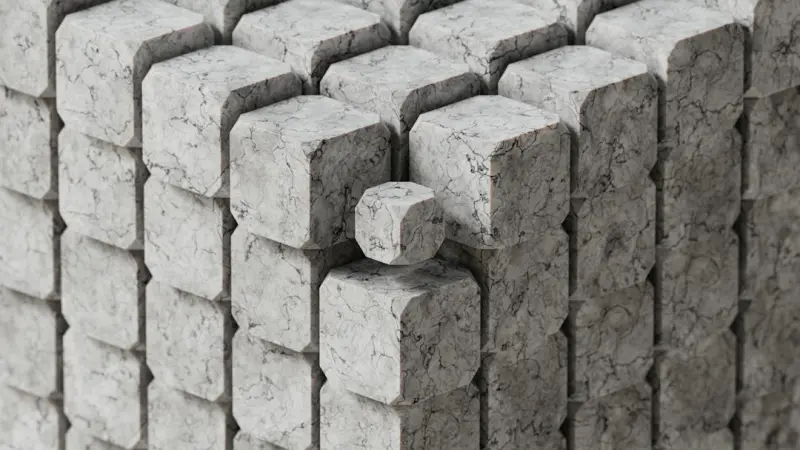
Concrete’s Quiet Revolution: From Carbon Capture to 3‑D‑Printed Skyscrapers
When you think of concrete, the first image that pops into most people’s heads is a gray slab poured on a construction site—hard, unyielding, and, frankly, boring. I’ve spent the last decade knee‑deep in the trenches of modern construction, and I can tell you that concrete is anything but dull. It’s undergoing a transformation so profound that the material we once considered the workhorse of the built environment is now becoming a high‑tech, sustainable, and even artistic platform. In this post, I’ll walk you through three game‑changing trends that are reshaping concrete: self‑healing chemistries, embedded digital sensors, and large‑scale 3‑D printing. Together, they’re turning concrete from a static foundation into a living, adaptable system.
1. Self‑Healing Concrete: The Material That Fixes Its Own Cracks
Concrete cracks are the bane of facility managers, structural engineers, and anyone who’s ever watched water seep through a tiny fissure on a cold morning. Traditionally, fixing those cracks means labor, downtime, and extra material—costs that add up quickly across a portfolio of assets.
Enter self‑healing concrete. The core idea is simple: embed microscopic capsules or vascular networks within the mix that release a healing agent when a crack forms. When stress exceeds the material’s tensile capacity, the capsules rupture, and a polymer or mineral‑based grout flows into the fissure, chemically bonding to the surrounding concrete and sealing the gap.
- Micro‑capsule technology: These tiny glass or polymer beads are loaded with epoxy or sodium silicate solutions. When a crack propagates, the beads break, releasing the agent that hardens within seconds.
- Vascular systems: Inspired by human circulatory systems, engineers embed thin, hollow fibers throughout the concrete. A healing fluid is pumped through these channels, delivering the repair material precisely where it’s needed.
- Biomimetic approaches: Recent research explores using bacteria that precipitate calcium carbonate when exposed to water and nutrients, effectively “growing” new concrete from within.
What does this mean for the industry? A dramatic reduction in maintenance cycles, longer service life for structures, and a lower carbon footprint because fewer repairs translate to fewer cement productions—a win‑win for both the bottom line and the planet.
2. Concrete Gets Smart: Embedding Sensors for Real‑Time Structural Health Monitoring
Imagine a skyscraper that can tell you, in real time, where its concrete is beginning to fatigue, where temperature gradients are causing expansion, or where moisture intrusion might be a future problem. That’s no longer science fiction. By embedding low‑power, wireless sensors directly into the concrete matrix, we can create a continuous data stream that feeds into building management platforms.
These sensors come in a few flavors:
- Strain gauges: Tiny fiber‑optic or piezoresistive elements that measure deformation under load. When the measured strain exceeds predefined thresholds, the system flags a potential issue.
- Temperature and humidity probes: Monitoring environmental conditions inside the concrete helps predict freeze‑thaw cycles and corrosion risks.
- Electrical resistance sensors: By measuring the electrical resistance of the concrete, you can infer its moisture content and even detect chloride ingress—a leading cause of steel reinforcement corrosion.
All this data can be integrated with existing building analytics tools. For instance, you might tie sensor outputs into Live Building Insights dashboards that already monitor energy use, creating a holistic view of performance and health. The result is a proactive maintenance strategy where you repair before failure, extending the structure’s lifespan and safeguarding occupants.
3. 3‑D‑Printed Concrete: Redefining Form, Speed, and Sustainability
The image of a concrete mixer truck delivering a uniform slurry is being replaced by robotic arms that “print” building components layer by layer. Large‑scale 3‑D printing with concrete is unlocking design possibilities that were once limited to the realm of imagination.
Key advantages include:
- Complex geometries: Organic curves, lattice structures, and internal voids can be produced without the need for custom formwork, dramatically cutting labor costs.
- Material efficiency: By optimizing the internal structure, you can reduce the amount of concrete needed while maintaining strength—another feather in the sustainability cap.
- Speed: A 3‑D printer can lay down a wall in a fraction of the time it takes traditional methods, reducing construction timelines and labor exposure.
One standout example is the recent construction of a multi‑story office tower where the primary load‑bearing walls were printed on‑site, achieving a 30% reduction in material waste. The building’s façade features a perforated concrete skin that not only provides shade but also creates a striking visual identity—proof that concrete can be both functional and artistic.
4. The Carbon Capture Angle: Turning Concrete into a Climate Ally
Concrete is responsible for roughly 8% of global CO₂ emissions, primarily because of cement production. The industry has responded with two complementary strategies: reducing the amount of cement and capturing carbon within the concrete itself.
Carbon capture technologies involve injecting captured CO₂ into the concrete mix, where it mineralizes into calcium carbonate, effectively locking the greenhouse gas away forever. This process not only reduces the net carbon footprint but also enhances concrete strength—a win for structural engineers.
When combined with self‑healing and sensor technologies, you end up with a triple‑threat** concrete system: greener production, longer lifespan, and continuous health monitoring. Such a synergy is what will differentiate forward‑thinking developers in the years to come.
5. From the Lab to the Site: Overcoming Adoption Barriers
Despite the excitement, the adoption curve for these innovations isn’t without bumps. Here are the three biggest hurdles and how we’re tackling them:
- Regulatory acceptance: Building codes have been slow to recognize self‑healing and 3‑D‑printed structures. Pilot projects that document performance data are essential. Partnering with local authorities to create performance‑based codes is the way forward.
- Cost perception: The upfront investment for sensor networks or specialized mixes can appear high. However, life‑cycle cost analyses consistently show that the reduction in maintenance, extended service life, and energy savings more than offset the initial spend.
- Skill gaps: Contractors accustomed to traditional formwork need training in digital workflows and printer operation. Upskilling programs and collaborations with tech vendors are already narrowing this gap.
By addressing these challenges head‑on, the industry can accelerate the transition from “concrete as a static material” to “concrete as an intelligent, adaptive platform.”
6. A Vision for the Future: Concrete as the Backbone of Smart Cities
Let’s zoom out and picture a city where every bridge, parking garage, and high‑rise is a data‑rich, self‑healing, carbon‑negative structure. Sensors embedded in the sidewalks tell municipal services where potholes are forming, and autonomous maintenance crews are dispatched before a crack becomes a hazard. 3‑D‑printed pedestrian plazas with integrated green spaces provide both shade and aesthetic appeal, while the concrete itself sequesters CO₂ from nearby industrial plants.
In this scenario, concrete isn’t just a building block; it’s a networked infrastructure component that contributes to resilience, sustainability, and the quality of urban life. The technology stack—self‑healing chemistries, sensor ecosystems, and additive manufacturing—creates a feedback loop where the built environment continuously monitors and optimizes its performance.
7. Practical Steps for Facility Managers and Developers
If you’re reading this and thinking, “How do I bring this into my next project?” Here’s a quick roadmap:
- Start small: Pilot a sensor‑rich concrete slab in a high‑traffic area to demonstrate ROI.
- Partner with innovators: Work with material suppliers that offer self‑healing additives and carbon‑capture mixes.
- Leverage existing platforms: Integrate sensor data with your building analytics system—perhaps through the same interface you use for high‑tech coatings that monitor façade health.
- Plan for the future: Design structural details that accommodate 3‑D‑printing equipment and consider modular construction approaches that simplify installation.
Remember, the goal isn’t to overhaul everything overnight. It’s about embedding intelligence and sustainability into the concrete decisions you make today, setting the stage for the resilient, low‑carbon cities of tomorrow.
Conclusion: Concrete Is No Longer the Quiet Background Player
From the moment we poured the first Roman roads to the skyscrapers that dominate today’s skylines, concrete has been the silent workhorse of civilization. The next chapter, however, positions concrete at the forefront of technological innovation. By embracing self‑healing chemistries, digital sensor networks, and additive manufacturing, we can transform this age‑old material into a proactive, sustainable, and even beautiful component of our built environment.
So the next time you walk across a freshly poured slab, look a little closer. Beneath that plain gray surface may lie a network of sensors whispering data, capsules poised to seal a future crack, and a design that could have been printed in minutes rather than weeks. That, my friends, is the quiet revolution of concrete—and it’s only just beginning.

Paul Gray is a dynamic blogger based in Brampton, where he shares his life with his amazing wife, Sarah. Known for his engaging writing style and relatable insights, Paul has carved out a niche in the blogging world that resonates with readers from all walks of life. When he's not crafting captivating posts, you can find him savoring a cold beer or indulging in the latest blockbuster movie. With a friendly demeanor and a passion for storytelling, Paul brings a unique perspective to his work, making him not just a blogger, but a voice for those who appreciate the simple joys of life.
Related Posts
Concrete Reimagined: From Cold Slab to Creative Canvas
Explore fresh ways to transform concrete from a functional slab into a creative canvas, using color,... Read More

The Ultimate Guide to Concrete: Benefits, Applications, and Best Practices
Concrete is a composite material made from cement, water, and aggregate. It is durable, resistant to... Read More
Concrete Gets Smart: Turning Slabs into Business Sensors
Smart concrete turns ordinary slabs into intelligent platforms, providing real‑time data for predi... Read More
Top Posts
DIY Home Repair Mastery: Building Skills, Saving Money, and Gaining Confidence
A hands‑on roadmap for homeowners to master DIY repairs, from planning and essential tools to safety, budgeting, and documenting every successful fix....Read More

A Home Inspector’s Guide to Sustainable Smart Living
Explore the evolving role of home inspectors in sustainable, smart living, from insulation upgrades to IoT sensors, and learn actionable steps to future‑proof...Read More

Snow Removal Reinvented: Data, IoT, and Sustainable Strategies for Modern Facilities
A fresh look at snow removal shows how predictive weather data, IoT‑enabled equipment, and sustainable de‑icing can turn a seasonal headache into a strategi...Read More

The Sustainable Revolution in Appliance Repair: A Comprehensive Guide
As the world shifts towards sustainable practices, appliance repair is playing a critical role in reducing waste and promoting energy efficiency. Learn how to m...Read More
0 Comments
Post Comment
You will need to Login or Register to comment on this post!