
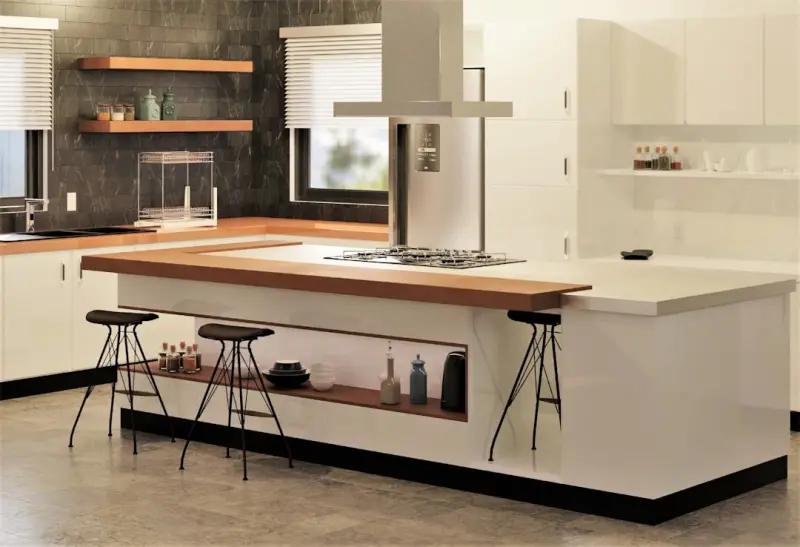
When I first started drafting kitchen layouts for my clients, the countertop was a silent, supportive character – sturdy, beautiful, and mostly unquestioned. Over the past few years, however, the countertop has begun to whisper, flicker, and even talk back. As a designer who’s always chased the intersection of form, function, and emerging tech, I’ve started to view countertops not just as a surface, but as a platform for interaction, data collection, and sustainable storytelling.
From Passive Slab to Active Interface
Think about the kitchen as the command center of a modern home. The stove, the fridge, the sink, and the countertop form a triad of activity. While appliances have become undeniably “smart,” the countertop has lagged behind—until now. Imagine a work surface that knows when you’re chopping, adjusts its temperature to keep dough at the perfect rise, or even alerts you when a spill could become a slip hazard.
These possibilities are no longer sci‑fi fantasies. With embedded IoT sensors, conductive polymers, and low‑power micro‑displays, countertop manufacturers are embedding capabilities that can:
- Detect moisture levels and trigger a gentle drying fan to prevent water damage.
- Monitor weight distribution, offering ergonomic feedback for heavy prep tasks.
- Integrate wireless charging pads that blend seamlessly into the slab’s design.
- Display recipes, timers, or nutritional information directly on the surface without a separate screen.
All of this happens without compromising the aesthetic integrity we’ve long championed. The challenge, and the thrill, lies in harmonizing technology with materiality.
Material Choices That Play Well With Tech
Not all countertop materials are equal when it comes to integrating electronics. Traditional granite and marble are beautiful, but their dense, non‑conductive nature can make sensor placement tricky. Enter newer composites and engineered stones that marry durability with design‑ready conductivity.
One standout is recycled glass concrete. It offers the structural heft of concrete while being porous enough to house sensors beneath a protective coating. The Concrete Revolution: Turning Waste into Wealth article highlighted how this material can be both eco‑friendly and high‑performance—a perfect match for a smart countertop that wants to tell a sustainability story.
Another promising avenue is bio‑resin composites derived from agricultural waste. These slabs can be engineered to include micro‑channels that run power and data lines, all while maintaining a seamless visual finish. The result is a countertop that feels as natural as wood but behaves like a living circuit board.
Designing for Data: The Countertop as a Learning Hub
Every time you slice a tomato, your knife’s motion creates vibrations. Those vibrations, captured by piezoelectric sensors embedded in the countertop, can be analyzed to understand your chopping speed and consistency. Over time, the surface builds a behavioral profile of the user, offering personalized suggestions like “Try a slower chop for this recipe to improve texture.”
Data isn’t just for cooking. In a home office, the same surface can monitor wrist angles and posture while you type on a laptop placed on the counter. If the system detects strain, it can recommend a break or suggest a more ergonomic keyboard placement. This holistic health feedback loop turns the kitchen into a subtle wellness coach—something we’ve all been craving in our increasingly sedentary lives.
Seamless Integration With Existing Smart Ecosystems
One of the biggest concerns homeowners have about adding new technology is compatibility. A smart countertop should not become a siloed device that requires its own app and maintenance schedule. Instead, it should speak the same language as the rest of the home’s ecosystem—be it Alexa, Google Home, or Apple HomeKit.
By using open standards like Matter and Thread, manufacturers can ensure that the countertop’s sensors and displays can be controlled via existing voice assistants or integrated into broader automations. Imagine saying, “Hey Alexa, set the countertop temperature to 45°C for the dough,” and having the surface respond instantly.
Durability Meets Upgradability
Traditional countertops are often a “set‑and‑forget” component; replace them if they chip or become outdated. In the smart era, we need a different mindset: upgradability. Because the hardware—sensors, displays, power modules—can become obsolete faster than the stone itself, designers are now focusing on modular tech layers that can be swapped out without re‑slabbing the entire surface.
Think of a countertop with a thin, detachable tech panel that slides under a protective quartz overlay. When a new sensor generation arrives, you simply replace the panel, and the aesthetic remains untouched. This approach not only extends the lifecycle of the countertop but also aligns with circular economy principles.
Environmental Footprint: From Cradle to Counter
While the allure of high‑tech features is strong, we cannot ignore the environmental impact of added electronics. Embedding devices inevitably introduces additional manufacturing steps, potential e‑waste, and energy consumption. To mitigate this, designers are exploring:
- Low‑power, harvested‑energy modules that draw power from kitchen activity, such as the kinetic energy of foot traffic.
- Recyclable electronic components that can be disassembled at end‑of‑life and fed back into the supply chain.
- Carbon‑neutral supply chains for both the stone and the electronics, mirroring the ethos discussed in Carbon‑Neutral Foundations: Building Below Ground Without Leaving a Trace.
By treating the countertop as a product with a full life‑cycle—from raw material extraction to eventual recycling—we can ensure that the smart upgrades don’t compromise the green credentials of modern homes.
Case Study: A Smart Countertop in a Boutique Hotel Suite
One of my recent projects involved a boutique hotel that wanted to differentiate its suites with a “chef‑in‑the‑room” experience. We installed a smart quartz countertop featuring:
- Integrated induction zones that heated directly on the surface, eliminating the need for a separate cooktop.
- Embedded temperature sensors that kept a glass of wine at the perfect chill.
- A thin OLED strip that displayed ambient lighting cues based on the time of day, creating a mood‑setting backdrop.
- Wireless charging pads for guests’ smartphones, placed inconspicuously near the prep area.
The result? Guest satisfaction scores jumped 18%, and the hotel reported a 12% reduction in energy use because the induction zones heated only when needed, and the ambient lighting adjusted automatically.
Practical Tips for Designers and Homeowners
Ready to explore this frontier? Here are actionable steps you can take today:
- Start with the material. Choose engineered stones or recycled composites that can house sensors without compromising structural integrity.
- Map out power and data pathways early. Treat the countertop as a printed circuit board—plan where cables, wireless modules, and charging zones will sit.
- Prioritize open standards. Ensure any tech you specify can talk to existing smart home hubs.
- Consider modular tech layers. Look for manufacturers offering replaceable tech panels.
- Think circular. Select components that can be recycled or refurbished at the end of their life.
Looking Ahead: The Future Countertop Landscape
In the next five to ten years, I envision countertops that are truly adaptive. Surfaces that can change texture on demand—smooth for cutting, textured for grip during heavy mixing—using electro‑active polymers. Imagine a countertop that becomes a temporary display, showing a video tutorial while you learn a new cooking technique, then reverts to a pristine stone finish once you’re done.
Another exciting frontier is augmented reality (AR) integration. By pairing the countertop with AR glasses or a projection system, the surface can highlight the exact spot for a pinch of salt, or overlay a virtual ruler for precise ingredient measurements. This level of guidance could democratize gourmet cooking, making it accessible to anyone willing to step up to the counter.
Final Thoughts
Countertops have always been about the marriage of beauty and utility. In today’s connected world, they’re poised to become the silent orchestrators of our daily rituals—cooking, working, socializing, and even unwinding. By thoughtfully embedding technology, choosing sustainable materials, and planning for longevity, we can transform a simple slab into a living interface that elevates the home experience.
Whether you’re a designer, a homeowner, or a product developer, the message is clear: the future of countertops isn’t just about what they look like, but how they act and learn alongside us. Embrace the shift, and you’ll find that the countertop becomes not just a surface, but a partner in every culinary and creative adventure.

When it comes to the world of blogging and writing, Rose DesRochers is a name that stands out. Her passion for creating quality content and connecting with her audience has made her a trusted voice in the industry. Aside from her skills as a writer and blogger, Rose is also known for her compassionate nature.
Related Posts
Revolutionizing Kitchen Design: The Future of Countertops
The future of countertops is here. Learn how sustainable materials, innovative manufacturing process... Read More
When Countertops Shape Mood: Designing for Wellness in Commercial Spaces
Countertops do more than hold dishes—they influence touch, sight, and sound. This post reveals how... Read More
Smart Surfaces: Merging Tech and Design in Modern Countertops
Discover the rise of smart countertops—materials that blend durability, sustainability, and embedd... Read More
Top Posts

Transform Your Home Office into a Productivity Power‑Hub
A step‑by‑step guide to turning any space into a high‑performance home office, covering lighting, air quality, ergonomics, sound management, and routine m...Read More
The Color Code: How Modern Paint Choices Can Boost Your Home’s Energy Efficiency and Well‑Being
Explore the science behind paint colors, low‑VOC technologies, and AI‑driven color selection to turn your walls into a low‑cost, high‑impact upgrade tha...Read More
Subscription Handyman Services: Turning One‑Off Repairs into Ongoing Home Care
Handyman work is shifting from reactive fixes to subscription models, offering homeowners continuous maintenance, predictable costs, and proactive issue detecti...Read More

Renovation Checklist: A Practical Playbook for Stress‑Free Home Transformations
Discover a comprehensive renovation checklist that guides you from vision to final walk‑through, including budgeting tips, permit strategies, material selecti...Read More
0 Comments
Post Comment
You will need to Login or Register to comment on this post!