

When Your Fridge Talks: The Future of Appliance Repair
Imagine opening your refrigerator and hearing it whisper, “Hey, I’m about to lose my cooling efficiency.” That moment, once the realm of sci‑fi, is becoming a reality thanks to a convergence of data analytics, IoT sensors, and a fresh business mindset that treats repair as a continuous service rather than a one‑off fix. In this piece, I’ll walk you through why appliance repair is undergoing a quiet revolution, how businesses can ride the wave, and what homeowners stand to gain when their appliances finally get a voice.
From Reactive Fixes to Predictive Care
For decades, the typical repair journey has been simple (and costly): something breaks, you call a technician, and you hope the part they replace lasts longer than the next warranty cycle. This reactive model is fraught with inefficiencies:
- Unplanned downtime – a broken dishwasher can halt a restaurant’s service line or force a family to scramble for meals.
- Higher labor costs – emergency calls often mean premium rates.
- Environmental waste – swapping out a whole unit instead of a faulty component adds to landfill mass.
Predictive maintenance flips the script. By continuously monitoring temperature fluctuations, motor vibrations, power draw, and even acoustic signatures, a smart appliance can flag a potential failure days—or weeks—before it becomes a crisis. The technology stack looks like this:
- Embedded sensors that capture real‑time operational data.
- Edge computing that preprocesses data locally to reduce latency.
- Cloud‑based analytics that apply machine learning models to spot anomalies.
- Automated ticketing that routes the issue to the nearest certified technician or dispatches a self‑service guide to the homeowner.
This approach doesn’t just prevent inconvenience; it creates a new revenue stream for service providers: subscription‑based health monitoring. Think of it as a gym membership for appliances—pay a modest monthly fee, and your fridge, oven, and washing machine stay in peak shape.
Why Subscription Models Are Gaining Traction
The Handyman Services Go Subscription & Remote Diagnostics article highlighted a similar shift in general repair services. Appliance repair is uniquely positioned to adopt this model for several reasons:
- High utilization – The average household runs three to five major appliances daily, providing a constant data stream.
- Predictable wear patterns – Refrigerators, for instance, have well‑documented compressor life cycles that can be modeled accurately.
- Brand loyalty incentives – Manufacturers can bundle extended warranties with monitoring services, strengthening customer retention.
From a business perspective, subscriptions smooth cash flow, reduce the high‑cost “fire‑fighting” calls, and allow technicians to schedule preventive visits during optimal windows. For homeowners, the value proposition is crystal clear: avoid the dreaded “my oven stopped working right before the holidays” scenario while also extending the lifespan of costly equipment.
Data‑Driven Diagnostics: Lessons From Energy Inspections
Predictive appliance care borrows heavily from the Beyond the Checklist: How AI‑Powered Energy Inspections Are Redefining Facility Performance playbook. In commercial facilities, AI algorithms parse terabytes of sensor data to pinpoint inefficiencies before they translate into higher utility bills. The same principle applies to a dishwasher’s water usage patterns or a dryer’s heat exchange efficiency.
Key takeaways for appliance repair firms:
- Standardize data formats – Ensure that sensor outputs across brands adhere to a common schema to simplify cross‑device analytics.
- Invest in explainable AI – Homeowners want to understand why a repair is recommended. Transparent models increase trust and adoption.
- Integrate with existing CMMS platforms – By feeding predictive alerts into a Computerized Maintenance Management System, you can automate work orders and track service history holistically.
IoT Meets Craftsmanship: Keeping the Human Touch
Automation can flag a problem, but the hands that fix it still matter. The Smart Restoration: Merging Heritage Craft with IoT Precision article illustrated how technology can enhance, not replace, skilled labor. In the context of appliance repair, this translates to:
- Augmented reality (AR) guides that overlay step‑by‑step repair instructions onto a technician’s field of view.
- Remote assistance where senior engineers can troubleshoot complex issues in real time, reducing on‑site time.
- Digital twins of appliance models that allow technicians to simulate a repair before physically opening the unit.
These tools empower technicians to work faster, reduce errors, and maintain the craftsmanship that has always been the backbone of quality repair.
Closing the Loop: Circular Economy and Appliance Refurbishment
Repair isn’t just about fixing a broken part—it’s about extending the lifecycle of an entire product. As sustainability becomes a boardroom priority, service firms are exploring circular strategies:
- Refurbish and Resell – Faulty appliances that are still structurally sound can be repaired, tested, and sold as certified pre‑owned units.
- Component Harvesting – Extracting usable parts (e.g., compressors, control boards) for reuse in other units reduces raw material demand.
- End‑of‑Life Take‑Back Programs – Partner with manufacturers to collect decommissioned appliances, ensuring responsible recycling.
These initiatives not only cut waste but also open new revenue streams. A subscription model can include “upgrade credits,” allowing customers to swap out an older model for a newer, more energy‑efficient unit after a predetermined usage period, with the old unit entering the refurbishment pipeline.
Real‑World Example: A Smart Refrigerator Pilot
To illustrate the potential, let’s walk through a pilot program launched by a mid‑size appliance service provider:
- Phase 1 – Sensor Deployment: Install temperature, humidity, and compressor vibration sensors in 5,000 refrigerators across a metropolitan area.
- Phase 2 – Data Collection: Capture baseline performance over three months, feeding the data into a machine‑learning model trained to detect early compressor degradation.
- Phase 3 – Predictive Alerts: The system flags 7% of units as “at‑risk.” Technicians receive automated work orders, arrive on schedule, and replace a failing bearing before any temperature excursion occurs.
- Phase 4 – Outcome: Customer satisfaction scores rise 22%, warranty claims drop by 15%, and the provider recoups the sensor cost within eight months through avoided emergency calls.
This case study underscores the financial and experiential upside of marrying IoT with a service mindset.
Implementation Roadmap for Repair Companies
Ready to dip your toe into this emerging paradigm? Follow these steps:
- Audit Existing Service Processes – Identify high‑frequency failure points and assess current response times.
- Select a Sensor Platform – Choose modular, battery‑operated sensors that can retrofit older appliances.
- Partner With Data Scientists – Build or license predictive models tailored to each appliance class.
- Develop a Subscription Offering – Structure tiered plans (basic monitoring, full predictive maintenance, and upgrade credits).
- Train Technicians on Digital Tools – Ensure your field force can interpret alerts, use AR guides, and update the CMMS on the fly.
- Launch a Pilot – Start with a limited geography or appliance type, gather feedback, and iterate.
By approaching the transition methodically, you mitigate risk while positioning your business at the forefront of a market poised for rapid growth.
Addressing Common Concerns
Privacy: Homeowners may worry about data collection. Transparent privacy policies, anonymized analytics, and the option to opt‑out of non‑essential data streams are essential.
Cost: The upfront expense of sensors and platform development can be offset through subscription revenue and reduced emergency call rates. Many providers offer financing or lease‑to‑own models for the hardware.
Reliability of AI: No model is perfect. Pair AI alerts with human verification to prevent false positives that could erode trust.
The Bottom Line
Appliance repair is at a crossroads. The old “break‑fix‑replace” cycle is giving way to a data‑rich, service‑oriented ecosystem where appliances talk, technicians listen, and homes stay running smoothly. By embracing predictive maintenance, subscription models, and circular economy principles, repair firms can unlock new revenue, improve customer loyalty, and contribute to a greener planet.
It’s an exciting time to be in the business—your next repair call might just be a proactive check‑in, and that’s a future worth building.

Lifan Chen is a freelancer based in Toronto specializing in marketing. With expertise in crafting effective marketing strategies and campaigns, Lifan helps businesses grow their brand presence and reach target audiences. As a Toronto-based freelancer, Lifan combines local market insights with creative marketing skills to deliver tailored solutions for clients.
Related Posts
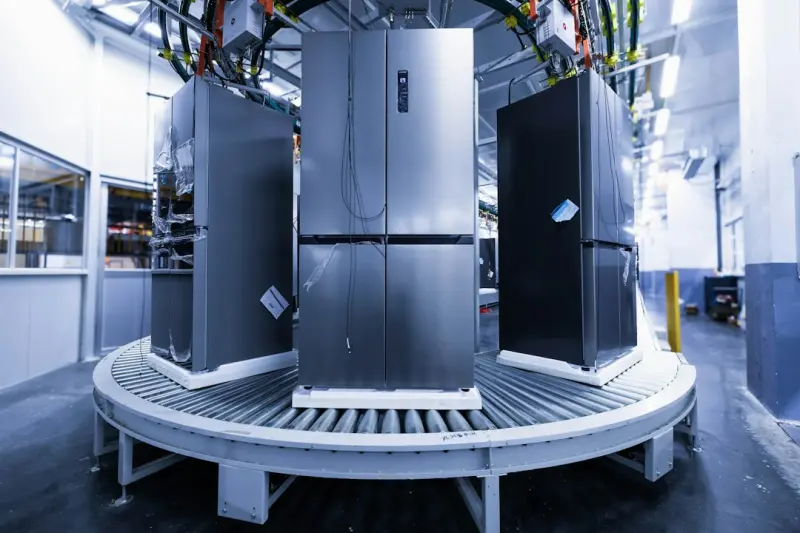
Subscription Appliance Repair: The Business Edge You’ve Been Missing
Subscription‑style appliance repair transforms unpredictable emergency costs into a strategic, dat... Read More

The Rising Trend of Sustainable Appliance Repair
Appliance repair is booming as homeowners seek greener, cost‑effective solutions. Learn the latest... Read More
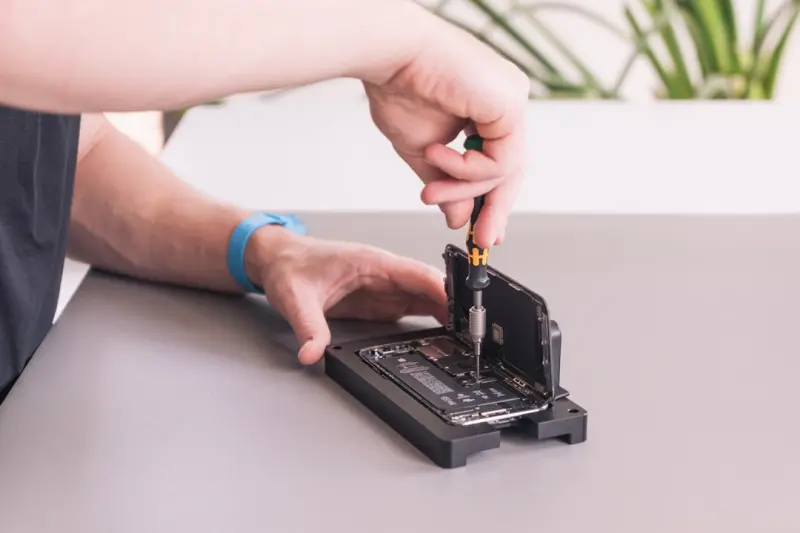
Smart Appliance Repair: From Proactive Maintenance to AI‑Driven Service
Learn how to shift from emergency fixes to predictive maintenance, choose the right tech‑savvy rep... Read More
Top Posts

Why a Bathroom Should Feel Like a Personal Spa, Not Just a Functional Room
Why a Bathroom Should Feel Like a Personal Spa, Not Just a Functional Room When I first stepped into a newly‑renovated bathroom that looked more like a boutiq...Read More

The Quiet MVP: How Smart Duct Cleaning Boosts Energy Efficiency and Occupant Health
A clean duct system does more than freshen the air; it slashes energy use, extends equipment life, and promotes occupant well‑being. Learn how to turn routine...Read More
Smart Carpet Care: Harnessing IoT and AI for Spotless Floors
Intelligent carpet care combines sensors, AI analytics, and automation to predict cleaning needs, cut water and chemical use, and extend carpet life—turning f...Read More

Turn Snow Removal Into a Winter Fitness Challenge
Learn to transform the dreaded chore of shoveling snow into a purposeful winter workout that builds strength, lifts mood, and creates side‑income opportunitie...Read More
0 Comments
Post Comment
You will need to Login or Register to comment on this post!