
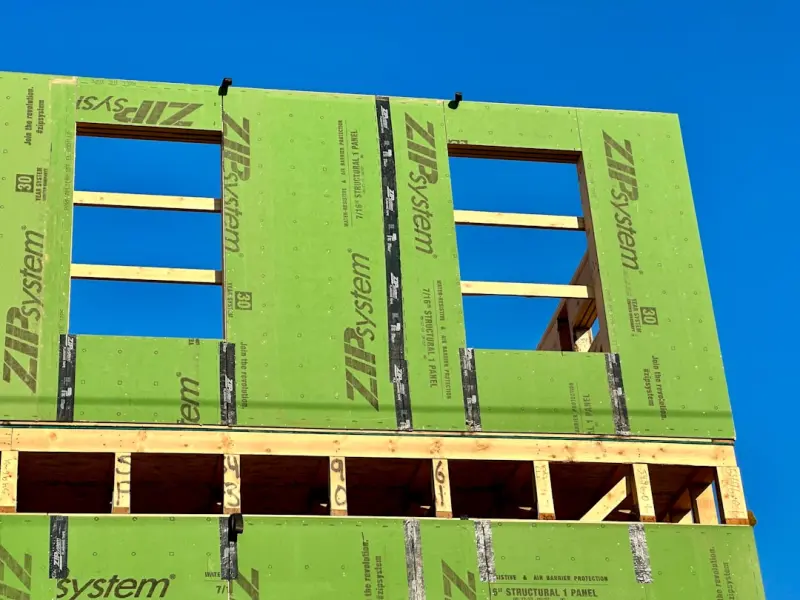
When I first stepped onto a raw construction site in Shanghai, the endless sheets of gypsum board felt like a blank canvas waiting for a story. Yet, after years of installing, sanding, and taping, I realized drywall is more than a finish—it’s a platform that can carry data, improve energy performance, and even shrink project timelines. In this post, I’ll walk you through a fresh perspective on drywalling: modular, sensor‑infused, and sustainably sourced solutions that are reshaping how we build today.
The Hidden Limitations of Traditional Drywall
For decades, drywall has been praised for its affordability and ease of installation, but the conventional approach hides three critical drawbacks:
- Static performance: Standard gypsum panels do nothing beyond providing a flat surface. They don’t respond to moisture, temperature, or occupancy.
- Material waste: Cutting and discarding off‑cuts leads to a surprisingly high amount of gypsum waste that often ends up in landfills.
- Labor intensity: Every joint requires taping, mudding, sanding, and finishing—a process that can add weeks to a schedule.
These constraints have become more pronounced as developers demand faster delivery, greener credentials, and smarter building envelopes. The question is no longer “Can drywall be installed?” but “How can drywall become a smarter, greener, and faster part of the construction ecosystem?”
Modular Drywall Panels: Building Speed from the Start
Enter modular drywall systems. Instead of the classic 4 × 8 ft sheets, manufacturers now offer pre‑engineered panels that arrive with pre‑cut openings, integrated edge reinforcement, and snap‑fit connectors. The benefits are immediate:
- Reduced on‑site cutting – Panels are fabricated to exact room dimensions in the factory, minimizing waste and eliminating the need for a circular saw on the job site.
- Faster assembly – Click‑or‑lock mechanisms replace the traditional “screw‑and‑tape” method, allowing crews to erect walls in half the time.
- Consistent quality – Factory conditions ensure uniform panel thickness, edge straightness, and surface smoothness, which translates to fewer defects during finishing.
Think of modular drywall as the “prefab” equivalent for interior walls. By shifting complexity to the factory, you free up skilled labor for higher‑value tasks like design coordination and quality assurance.
Embedding Intelligence: Sensors Inside the Wall
What if the very wall that separates a conference room from a hallway could also monitor indoor air quality, detect moisture intrusion, and adjust lighting levels? The answer lies in integrating low‑power IoT sensors directly into drywall panels. These sensors can be laminated between the gypsum core and the facing paper, protected from physical damage while staying close to the environment they’re meant to measure.
Key sensor types gaining traction include:
- Humidity & temperature nodes – Prevent mold by alerting facilities managers the moment a wall starts to retain moisture.
- CO₂ and VOC detectors – Provide real‑time data for healthy indoor air strategies.
- Passive infrared (PIR) motion sensors – Enable occupancy‑based lighting and HVAC controls without additional ceiling fixtures.
Because the sensors are wired to a shared bus that runs through the panel framework, retrofitting becomes a non‑issue: the wall itself is the conduit. This approach dovetails nicely with broader smart‑building initiatives, such as AI-powered facades, where exterior skins adapt to weather conditions. In the same vein, a sensor‑rich drywall can make interior environments equally responsive.
Sustainable Gypsum: From Mine to Circular Economy
Traditional gypsum board production relies on mining natural gypsum, a process that consumes energy and generates dust. Today, two sustainable pathways are emerging:
- Recycled gypsum: Post‑consumer drywall scrap is mechanically re‑processed into a fine powder and blended with a small proportion of virgin gypsum. The resulting product matches the strength and fire‑rating of conventional panels while diverting waste from landfills.
- Industrial by‑product gypsum: Flue‑gas desulfurization (FGD) gypsum—captured from coal‑power plant emissions—offers a high‑purity gypsum source that would otherwise be stored in waste ponds. Using FGD gypsum reduces the demand for mined material and helps lower overall carbon footprints.
Both options benefit from the modular system’s precision cutting, because fewer off‑cuts mean the recycled content stays in the building rather than being re‑ground for another batch.
Health‑First Installation: Tackling Dust and Airborne Particles
Drywall dust is notorious for irritating eyes, throats, and lungs. While respirators and wet‑cut methods have been standard safety measures, newer practices are raising the bar:
- Dust‑capturing saws equipped with vacuum ports that pull particulates directly into HEPA‑rated filters.
- Pre‑sealed panels that feature a thin, water‑based coating on the front face, preventing gypsum dust from becoming airborne during handling.
- Real‑time air‑quality monitors integrated into the sensor network (see previous section) to alert crews when particulate levels exceed safe thresholds.
By treating dust control as a data‑driven process, you not only protect workers but also comply with increasingly stringent occupational health regulations.
Digital Planning Tools: From BIM to Augmented Reality
Before the first sheet arrives, designers now rely on Building Information Modeling (BIM) to layout wall assemblies, coordinate penetrations, and simulate sensor placement. Some firms are taking it a step further with augmented reality (AR) headsets that overlay the digital drywall model onto the physical space, allowing on‑site teams to verify clearances in real time.
This digital‑first workflow aligns perfectly with the modular approach: the BIM model can export exact panel dimensions, and the AR overlay confirms that the pre‑fabricated pieces will fit without surprise. The result is a tighter feedback loop, fewer change orders, and a smoother handoff from design to construction.
Case Study: A Smart Office Retrofit in Singapore
One of the most compelling examples I’ve seen recently involved a 25,000 sq ft office tower undergoing a major interior overhaul. The client wanted a rapid schedule, low carbon impact, and real‑time environmental monitoring. Here’s how the project unfolded:
- Modular panels were ordered to exact floor plans, reducing on‑site waste by 38%.
- Each panel came with embedded temperature, humidity, and CO₂ sensors wired to a central building‑management system.
- The recycled‑gypsum content hit 45% of the board’s mass, earning LEED v4 points for material reuse.
- AR glasses allowed the installation crew to visualize sensor locations before drilling, eliminating a potential rework cycle.
Within six weeks—half the usual timeline—the entire floor was ready for occupancy. Post‑occupancy surveys reported a 20% increase in occupant comfort, directly tied to the wall‑embedded sensors that triggered HVAC adjustments in real time. The project also referenced insulation reimagined strategies, pairing the smart drywall with reflective insulation to further cut energy use.
Integrating Drywall with the Building Envelope
While the interior wall is a natural place for sensors, the same technology can extend to perimeter systems. For instance, smart fences now include vibration and intrusion sensors that talk to the building’s security platform. By using the same data protocol for drywall and perimeter devices, facilities managers gain a unified view of both interior climate and exterior security—turning disparate systems into a cohesive, intelligent network.
Future Outlook: 3‑D‑Printed Drywall and Beyond
The next frontier may seem futuristic, but 3‑D‑printing gypsum composites is already in pilot phases. Imagine ordering a custom‑shaped wall panel that incorporates built‑in conduits for power, data, and even light‑guides—printed layer by layer to match complex architectural forms. Such capabilities would blur the line between structural and decorative, opening doors for truly bespoke interiors without the labor‑intensive hand‑crafting we associate with today’s custom wall finishes.
Coupled with AI‑driven design optimization, future drywall could automatically adjust its density in high‑stress zones, embed antimicrobial agents where hygiene is paramount, and even self‑heal minor cracks using micro‑capsules of binding agents that activate when exposed to moisture.
Practical Takeaways for Contractors and Designers
Ready to experiment with smarter drywall? Here’s a concise checklist:
- Evaluate modular panel vendors for factory‑cut accuracy and recycled‑gypsum content.
- Map sensor requirements early—temperature, humidity, CO₂, and occupancy are common starters.
- Integrate sensor bus planning into BIM to avoid clashes with electrical and plumbing routes.
- Adopt dust‑capture tools and set up real‑time air‑quality monitoring on site.
- Leverage AR or VR tools for on‑site verification before committing to cuts.
- Document waste streams to quantify recycled content and support sustainability certifications.
These steps don’t require a complete overhaul of your existing processes; they’re incremental upgrades that can be piloted on a single floor or project and scaled as confidence grows.
Conclusion: From Passive Partition to Active Building Component
Drywall has long been the unsung hero of interior construction—quiet, dependable, and invisible. By rethinking it as a modular, sensor‑rich, and sustainable platform, we transform that quiet hero into an active participant in the building’s performance. The result is faster construction, healthier occupants, lower carbon footprints, and a richer data set for facility managers.
In my experience, the most rewarding projects are those that let a wall do more than just stand. When a drywall panel can tell you when it’s too humid, guide a robot to the next screw, or shrink your project schedule by a week, you’ve truly moved from “drywalling” to “drywalling intelligently.” The future is already knocking—let’s answer it with smarter walls.

Lifan Chen is a freelancer based in Toronto specializing in marketing. With expertise in crafting effective marketing strategies and campaigns, Lifan helps businesses grow their brand presence and reach target audiences. As a Toronto-based freelancer, Lifan combines local market insights with creative marketing skills to deliver tailored solutions for clients.
Related Posts
The Rise of Intelligent Drywall: Turning Walls into Data Hubs
Intelligent drywall integrates thin sensors into gypsum boards, creating walls that monitor humidity... Read More
Creative Drywall Finishes: Turning Plain Walls into Personalized Spaces
Explore how to upgrade drywall from a simple partition to a design asset with creative finishes, sou... Read More
The Art of Drywalling: A Comprehensive Guide
Drywalling is a crucial step in construction and renovation, providing a smooth surface for painting... Read More
Top Posts

Designing Spaces That Listen: The Quiet Revolution in Interior Design
A deep dive into how acoustic treatments, biophilic touches, adaptive lighting, and modular furniture can turn any workspace into a dynamic, performance‑boost...Read More
Transforming Your Garage Door into a Smart, Sustainable Gateway
A garage door is more than a functional entry—it can be a design centerpiece, an energy‑saving barrier, and a hub for smart home technology. This guide show...Read More
Resurrecting Original Hardwood Floors: A Homeowner’s Guide to Restoration and Value
Original hardwood floors can be the heart of a historic home, offering timeless beauty and lasting value. This guide walks you through assessment, restoration t...Read More

When Your Alarm Becomes a Neighborhood Ally: The Next Evolution of Home Security
Home alarms are shifting from isolated devices to community partners, using AI, privacy‑first mesh networks, and lessons from enterprise security to create sh...Read More
0 Comments
Post Comment
You will need to Login or Register to comment on this post!